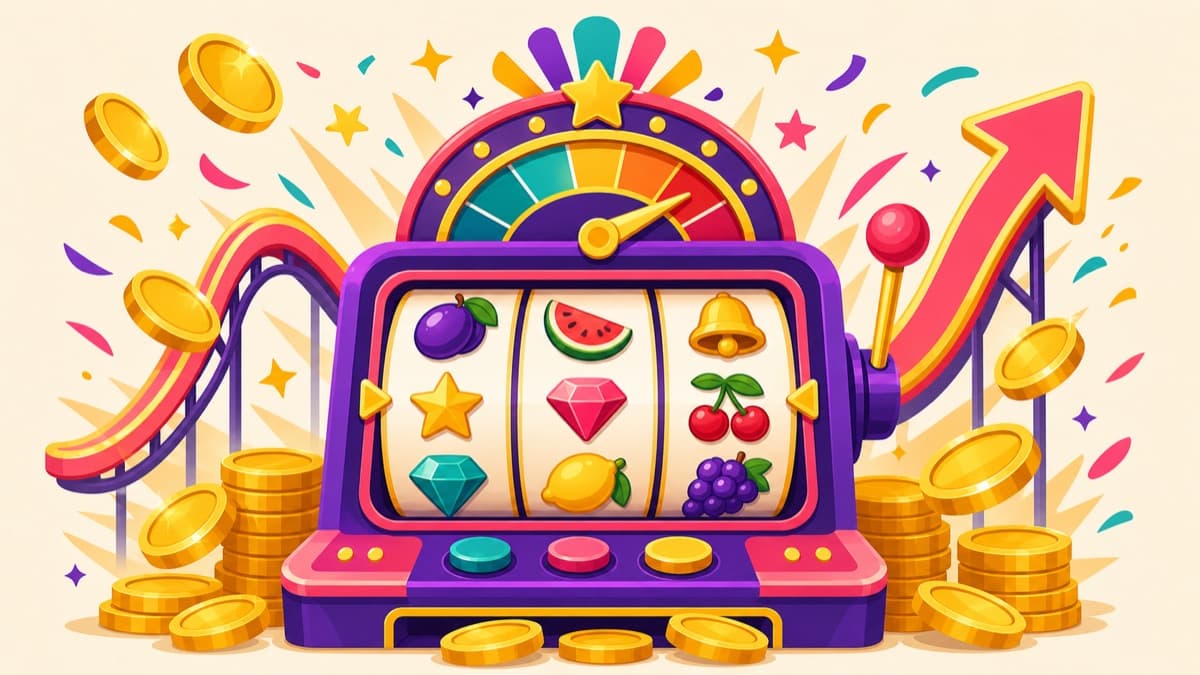
Understanding Slot Volatility: Low vs High Variance
Slot volatility—also called variance—describes how often and how large a slot's payouts tend to be over time. It's one of the most important concepts for managing your bankroll and choosing games that match your playing style. Whether you're using GCash, Maya, or bank transfers at a PAGCOR-licensed online casino, understanding volatility helps you make informed decisions.
What Is Slot Volatility?
Volatility measures the statistical risk and reward pattern of a slot game. It reflects how spread out wins are across your gaming session:
- Low volatility (low variance) slots pay smaller wins more regularly
- High volatility (high variance) slots pay fewer wins, but they tend to be much larger
This is a long-run statistical characteristic, not a guarantee of what you'll experience in any single session. Your actual results will always vary.
Low Volatility Slots: Steady and Frequent
Low variance games are ideal if you prefer consistent, smaller payouts and want your bankroll to last longer.
Characteristics:
- Frequent wins (though usually modest amounts)
- Lower risk of rapid bankroll loss
- Smoother gameplay experience with less extreme ups and downs
- Shorter sessions feel rewarding
Best for:
- Players with smaller budgets
- Those who enjoy extended play sessions
- Anyone preferring predictable, steady entertainment
- Beginners learning slot mechanics
Trade-off: You're unlikely to hit massive jackpots; wins stay within a comfortable range.
High Volatility Slots: Bigger Risk, Bigger Rewards
High variance games appeal to players chasing larger payouts and willing to accept longer dry spells between wins—high-volatility Pragmatic Play hits like Sweet Bonanza and Gates of Olympus are textbook examples.
Characteristics:
- Fewer wins overall, but significantly larger when they occur
- Higher risk of rapid bankroll depletion
- Potential for life-changing payouts or feature wins
- More dramatic swings in session results
Best for:
- Players with larger budgets
- Those pursuing jackpots or bonus features
- Experienced players comfortable with variance
- Session players with time limits
Trade-off: You may experience extended stretches without wins, requiring patience and discipline.
How Volatility Affects Bankroll Management
Your chosen volatility level directly impacts how you should structure your bets:
- Low volatility: You can play longer with smaller bet sizes. A ₱5,000 budget might sustain 50+ spins comfortably
- High volatility: Your bankroll depletes faster. The same ₱5,000 may last 20–30 spins before hits appear, if at all
Never bet money you can't afford to lose, regardless of volatility. Set strict limits on your session budget before you begin.
Medium Volatility: The Middle Ground
Many slots fall between extremes, offering balanced volatility that combines:
- Reasonably frequent wins
- Moderate payout sizes
- Manageable risk without sacrificing excitement
These suit most recreational players seeking variety.
Key Points for Filipino Players
When choosing slots at PAGCOR-licensed casinos:
- Check game descriptions: Licensed operators list volatility or variance ratings in game info
- Test before committing: Play demo versions (if available) to feel the rhythm
- Match your bankroll: Don't chase high volatility games with insufficient funds
- Understand it's statistical: Your actual session will differ from mathematical averages
- Responsible play: Set limits on time and money, use deposit controls and self-exclusion tools if needed
The Bottom Line
Volatility isn't about which slot is "better"—it's about fit. A low volatility slot is perfect for a player wanting steady entertainment on a limited budget; a high volatility slot suits someone with a larger bankroll and jackpot ambitions.
Understand your own preferences, budget constraints, and risk tolerance. Neither low nor high volatility guarantees profit. Slot outcomes are determined by random number generators, and over time, the house edge—built into every game—is the expected long-term mathematical advantage.
Play within your means, choose games that match your style, and remember that slots are entertainment, not income.